
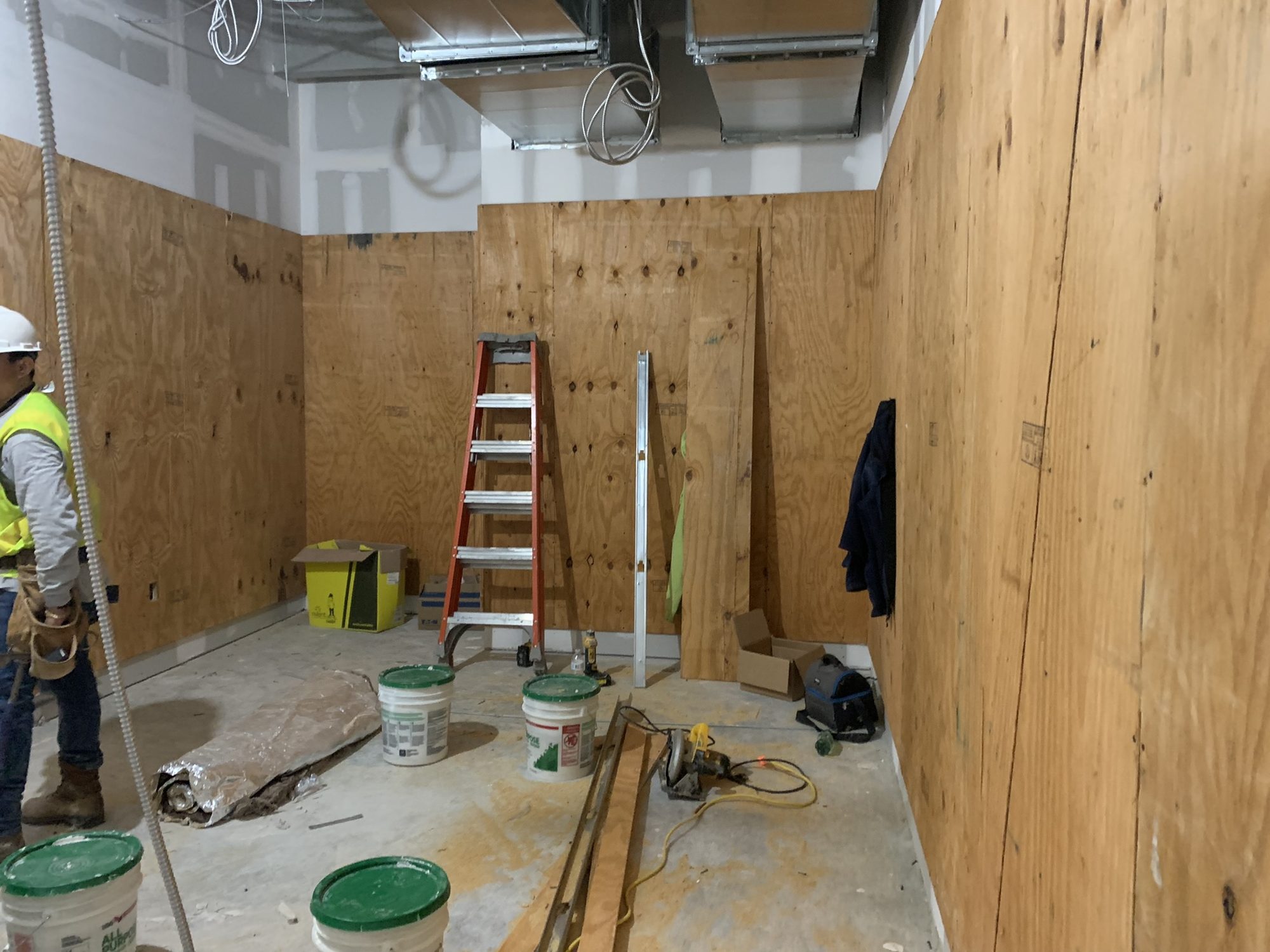
What ICD 705 is
Intelligence Community Directive 705 is the policy that governs how facilities for Sensitive Compartmented Information are built, accredited, and managed. It was issued by the Director of National Intelligence and applies across the Intelligence Community. Its purpose is reciprocity: a facility accredited under ICD 705 by one agency should be acceptable to the others, because everyone built to the same rules.
ICD 705 itself is short. It sets policy and assigns responsibility. The construction details live in a companion document, the Technical Specifications for Construction and Management of Sensitive Compartmented Information Facilities, usually called the IC Tech Spec. The Tech Spec is where you find wall assemblies, door requirements, acoustic ratings, penetration rules, and the documentation an accrediting official will expect. The version in force as of this writing was issued in 2020, and an updated Tech Spec is expected. Each version has been stricter than the one before it, which is one more reason to build from the approved documents for your specific project rather than a general reading of the standard. We will update this article when the new version is published.
Before ICD 705, Intelligence Community elements followed DCID 6/9 and the Department of Defense followed JAFAN 6/9 for Special Access Program facilities. Each had its own preferences, which meant a facility accepted by one organization could be rejected by another. ICD 705 and the Tech Spec were written to end that.
What the Tech Spec actually requires
The Tech Spec is a long document, but most of it comes down to a handful of principles that a construction team has to carry through every detail of the work.
A continuous perimeter. The secure boundary has to be complete. Walls run from the true floor to the true ceiling, not to a dropped ceiling. Floors, walls, and ceilings form one envelope with no unplanned gaps. Every joint is sealed. This sounds obvious until you are coordinating a dozen trades through the same wall.
Acoustic performance. Conversations inside the facility must not be intelligible outside it. The Tech Spec defines sound groups and assigns Sound Transmission Class ratings to the perimeter. The common targets are STC 45 and STC 50, and the rating applies to the whole assembly, including doors, seals, ducts, and penetrations, not just the wall itself.
Controlled penetrations. Every pipe, duct, conduit, and cable that crosses the perimeter is a potential path for sound or signal. Each one has to be located, detailed, approved, sealed, inspected, and recorded. Large duct openings need protection. Unused penetrations are closed.
Doors and hardware. The entrance door is the hardest-working part of the perimeter. It needs to meet the acoustic rating, carry GSA-approved locking hardware, and work with the intrusion detection and access control systems without compromising either.
Intrusion detection and access control. The facility is monitored. Sensors, door position switches, and access control are specified and tested as part of accreditation.
TEMPEST and RF considerations. Where the Certified TEMPEST Technical Authority determines countermeasures are needed, shielding or separation requirements are added to the construction. Not every facility needs them, and the decision is made by that authority, not the builder.
Documentation. The Construction Security Plan, the Fixed Facility Checklist, inspection records, test results, and as-built drawings are part of the deliverable. A facility that performs but cannot prove it has not finished.
Why it applies to SAPFs too
Special Access Program Facilities are accredited through the Department of Defense rather than the Intelligence Community, under DoD Manual 5205.07. But current DoD policy adopts the same IC Tech Spec as the construction baseline for SAPFs. In practice, a SCIF and a SAPF are built to the same physical standard. The difference is who approves it and what information it protects. We cover that in a separate article on SCIF versus SAPF.
Why the standard shapes construction from the first drawing
The most common mistake with ICD 705 is treating it as a final inspection checklist. The accrediting official does inspect at the end, but by then the walls are closed, the ceilings are in, and the penetrations are buried. If something is wrong, the fix means opening finished work.
A team that understands the standard plans for it from the start. The secure perimeter is traced on the drawings before anything is released. Wall types are chosen to hit the acoustic rating as a complete assembly. Mechanical and electrical routes are planned so penetrations are minimized and the ones that remain are detailed. Inspection points are scheduled so the security manager can see critical work before it is covered. Deficiencies are corrected while the responsible trade is still on site.
That is what Envision means by building to ICD 705 rather than inspecting for it. The accrediting official still makes the decision. Disciplined construction gives them a clean facility and a clear record to decide on.
Who should read the Tech Spec
The IC Tech Spec is a public document, available from the Office of the Director of National Intelligence. Facility security officers, program managers, and anyone responsible for a secure space should be familiar with it. So should the general contractor. If a contractor cannot speak to the Tech Spec in detail, they should not be building your SCIF.
Have a secure facility project in Maryland, Virginia, or Washington, DC? Envision Solutions builds ICD-705 SCIFs and SAPFs with cleared personnel and veteran-led preconstruction. Request a quote or call 301-247-7229.
Written by

Envision Solutions
Envision Solutions is a design-build general contractor based in Newburg, Maryland, serving Maryland, Virginia, and Washington, DC. The team builds ICD-705 SCIF and SAPF facilities with cleared personnel and veteran-led preconstruction, and self-performs framing, drywall, and finishes on secure work. Founded in 2013. Articles are written at an unclassified level and reviewed by the Envision preconstruction team.